SWEET POTATO DIARIES 'About My Favorite Ingredients'
ALMONDS and other NUTS
Just
think about this for a minute: Every small almond contains the dormant
energy and life-force it takes to begin to sprout into a great big
tree! All it needs is a little water and moderate temperature and in a
short few hours it comes to life! Nuts contain healthy fats and many
health-giving nutrients. While I use many nuts in my recipes, Almonds
are the most versatile in taste for baking, as you may know with the
growing popularity of Almond and Coconut flour in gluten-free circles
these days.
Consuming soaked and/or sprouted nuts
offers your body bio-available (more accessible for your body to use)
nutrients and a softer nut to digest. Because most little nuts desire
to become that great big tree, they also contain enzyme inhibitors which
make digestion difficult for humans. So what's a nut lover to do?
Soaking the nuts in water for several hours leeches most of these
compounds out into the water. Removing the skins by quickly blanching
the almonds (or buying blanched almonds or ground, blanched almonds
(almond 'flour') is beneficial in three ways. 1. The highest
concentration of the enzyme inhibitors are contained in the skin. 2.
Almond flour rather than the meal (ground whole almonds, skin intact) is
easier to bake with and tastes delicious. 3. The FDA irradiates Almonds because many nuts, grains and seeds can contain a dangerous fungus when it has been
stored in less than optimal conditions. If
you choose Raw Almonds they should be blanched and deskinned or soaked
with a pinch of Vitamin C powder or Hydrogen Peroxide (unless you know
exactly how they've been stored). Another good reason to buy local and organic! Sure would be nice if we all
had our own nut trees (along with a few citrus and fruit trees!
Also,
some nuts and seeds contain oxalates (an organic acid that our bodies
use to create other substances) found in many great fruits and veggies
as well as some grains and legumes. Typically, oxalates are harmless
because when a food is high in oxalates healthy microflora in your
intestines will metabolize them or they will usually bind with calcium
and be escorted out of the body. If there's not enough calcium or if
your gut has been damaged by antibiotics, wheat, or a sugary/starchy
diet that allows yeast (which also produce oxalates) to proliferate and
permeate the intestinal walls, these oxalates can enter the bloodstream
where they bind with calcium and may cause kidney stones or lodge in
tissues or bones. You can reduce the amount of oxalates in veggies that
are high in them (spinach, celery, carrots and broccoli are some) by
boiling them and tossing the water. This may also work with almonds. If
you think you may have a problem with eating foods that contain
oxalates you may want to consider using walnuts or another non-oxalate
containing nut.
COCONUT and COCONUT FLOUR
Unless
you've been living under a rock for awhile you've heard about the
praises of coconuts lately! Their water, meat, oil and milk (made by
blending it all together) have so many wonderful, live-giving health
benefits! It's no wonder it fell victim to the bad press of the evil
soy and cottonseed industry so many years ago, keeping healthful coconut
oil out of our foods and the health-destroying hydrogenated oils in for
decades! Cottonseeds and soybeans are toxic in their natural state.
(Soy has been genetically modified and processed to make it edible.
Ancient cultures knew to ferment it.)
Thankfully,
newer research and media coverage has let the cat out of the bag and
coconut oil is being used again. For all those years the coconut was
demonized, isn't it funny how it still remained an ingredient in infant
formula? We were all just 'snowed'!
Coconuts
are full of vitamins, minerals and many trace minerals. Extremely high
in fiber with potent antimicrobial and antiviral qualities, it helps
strengthen our immune system. It's approximately 60% fat, and over 90%
of it is saturated, don't panic, as you will see that's good: It's main
fat is a medium chain fatty acid called Lauric Acid. Lauric Acid is
quickly converted to energy by the liver, speeding our metabolism and
promoting a lean body! Cultures who relied on the coconut as a staple
in their diets were lean, healthy peoples prior to World War ll. It was
shortly thereafter, our American-made, sugar laden products made with
both refined and hydrogenated oils and wheat became readily available
and their healthy, virtually cancer and modern disease-free existence
began to change.
SWEET POTATOES and YAMS
I
am in LOVE with the Sweet Potato! I can't help it, and my husband is
not jealous because he LOVES 'em too! This beautiful, luscious, creamy
fleshed, delectable member of the Morning Glory family (I know, who
knew?!) is not even in the same botanical family as the potato, which
means it does not contain the alkaloids associated with the 'nightshade
family' (eggplants, tomatoes, peppers and white potatoes). Alkaloids
are substances that some people are sensitive to and research suggests,
may aggravate arthritis. Even though sweet potatoes taste so
deliciously sweet they are high in fiber and slow to digest which means a
slower release of its sugars. It's fiber is classified as a resistant
starch, which means it is not digested into your bloodstream but travels
through your digestive system to your colon where it becomes a
prebiotic fiber that feeds the good little probiotic bugs in your
intestines, thus raising the nutrient absorption of your food!
Resistant
starch has been found to promote weight loss on several levels.
Because it's not absorbed into your bloodstream it doesn't get turned
into fat like other carbohydrates. It also creates Butyrate, the same
fatty acid found in butter that research indicates may block the liver's
use of carbohydrates for fuel. This means our body would need to burn
fat as an alternative fuel source! It also increases satiety producing
hormones and staves off hunger because it's bulky and satisfying! See
what I mean??
While
research shows that resistant starch improves blood glucose levels and
decreases insulin resistance, in contrast, the starch found in wheat
flour digests quickly and is sent directly into our bloodstream. This
means we're receiving a double-whammy when we're consuming all those
yummy baked goods or cereals containing the combination of wheat,
starch, and sugar! This is especially true on an empty stomach, which
is when we often seem to be eating that combination...early mornings,
mid-afternoon, or late at night! Add in a daily soda, processed fruit
juice, a candy bar, the PBJ or deli sandwich or slice of pizza we had
for lunch and we REALLY can't figure out WHY we have an epidemic of diabetes in this country!? But
surprise! Our demure, mild-tasting, little Sweet Potatoes replace
white flour, oil, and some of the sweetener in many of my recipes! How
COOL is that!?
Typically,
I use the yellow Sweet Potato and sometimes the orange one known as the
Yam here in America (although we often interchange the names!) because
they are easily accessible. If you come across any of the various other
colors such as purple or white, by all means be brave and experiment!
In addition to all their other gret benefits, sweet potatoes are also
high in antioxidant compounds and are a great source of vitamins and
minerals such as C, A, B6, copper, manganese and iron! RED SKINNED POTATOES Coming soon!
SUMMER SQUASH and other Fruits and Veggies
Coming soon!
EGGS
Eggs
are nature's perfect food. I know, if you're a vegan I'm suggesting
eating little embryos and placentas and it disgusts you! I must admit I
draw the line at lamb and veal, refuse to touch either and don't
particularly enjoy the thought of needing to eat the entire animal in
order to be politically correct, so for this reason I will never be a
hunter unless misfortune necessitates it! I'm afraid I would quickly
become a vegetarian if I had to find my own meat! But plucking the eggs
from my chicken's nests does not fill me with the same guilt as slaying
Porky Pig!
Proteins
are a combination of amino acids. Nine of them are essential, which
means we need to obtain them from our diet. If we're low in, or missing
just one of them our bodies cannot make the other proteins it needs.
Eggs are a rich source of amino acids.
The
nutrition contained within and its numerous culinary uses, truly make
the egg indispensable in my kitchen! Fresh and clean I often put them
in smoothies and make meringues and eggnogs, thoroughly enjoying them in
their raw form. Eggs should come from chickens that have been able to
roam and enjoy feeding on plants and insects. That's when you can enjoy
their eggs containing the right balance of nutrients and Omega 3 oils
rather than their poor, grain-fed counterparts whose eggs pass on a
highly unbalanced ratio of Omega 6 fatty acids. High in protein, eggs
are little powerhouses of nutrients!
AVOCADO OIL
I Looooove Avocado Oil! I would marry it if I could! With
a smoke point of over 500 degrees this delicious, mono-unsaturated,
mild tasting, versatile oil has got to be my all around favorite oil!
It's even a great body oil! But... I
actually don't use a whole lot of oil (unless I drizzle it after cooking or for salads) because many of my recipes just
don't require the addition of it. The whole foods I use often bring
with them their own oils! Even good oils are also a partial food and I
like to think our bodies assimilate and digest the whole food better.
Anytime we can avoid heating oil it's best to do so, even the stable
oils like coconut, palm, butter and ghee. Heating oils to high
temperatures (something often done in processing and that's why you always
want to buy cold-pressed oils) breaks them down and creates those
awful, rogue, free-radicals that run around our bodies aging and
destroying our healthy cells. We've heard a lot about those, and how
our modern diet creates and promotes these free radicals which is why we
need to boost our intake of antioxidants, which help to counteract the
damage. Better yet, just don't do the damage in the first place! Okay,
getting off-track here....
COCONUT OIL
I
actually don't use a whole lot of oil (unless I drizzle it after cooking or for salads) because many of my recipes just
don't require the addition of it. The whole foods I use often bring
with them their own oils! Even good oils are also a partial food and I
like to think our bodies assimilate and digest the whole food better.
Anytime we can avoid heating oil it's best to do so, even the stable
oils like coconut, palm, butter and ghee. Heating oils to high
temperatures (something often done in processing and that's why you always
want to buy cold-pressed oils) breaks them down and creates those
awful, rogue, free-radicals that run around our bodies aging and
destroying our healthy cells. We've heard a lot about those, and how
our modern diet creates and promotes these free radicals which is why we
need to boost our intake of antioxidants, which help to counteract the
damage. Better yet, just don't do the damage in the first place! Okay,
getting off-track here....
Good
fats are, well, GOOD! Thanks again to big agri-business many
predominately used fats are literally toxic. When the soybean and
cottonseed industries discovered their chemically engineered trans-fats
could exstend the shelf-life of most processed foods, they began to push
their deadly trans-fats and demonized saturated fats in order to take
over the market, and that they did! Now, 50 or so years later we are
dealing with the diseased, residual affects they've had on our health.
The re-evaluation of old studies as well as new research shows no
correlation between blood cholesterol obtained from natural plants and
animals and atherosclerosis (hardening and clogging of our arteries)!
Coconut
oil is back in favor, and in a big way! It's not only an extremely
stable oil, it tastes and smells great, and has wonderful health giving
properties.
BUTTER
You'll probably be happy to know that butter, ghee and cream
contain very little lactose sugar or casein protein and are usually very easily digested! They promote the production of Butyrate, a fatty acid that
nourishes and balances the pH in your colon. As well, Butyrate
encourages the body to burn fat for fuel! Nice, huh?!
HEAVY CREAM
First of all, Please read the blog THE DEAL WITH DAIRY
The Casein protein in Milk shares
structural similarities to the gluten/gliaden protein in wheat. It has
opiod-like peptides that attach to our brain's receptors and give us a
'feel good' feeling, thus we enjoy drinking milk. Notice I didn't say Cream! Cream contains only a small amount of Casein, Thank U God, Thank U!!!! Research
also shows the casein protein to be most harmful when it's separated
from the natural fat in the milk! Also, skim milk has 3 to 5 times more
lactose than full fat milk! Why is Big Business telling us to buy lowfat
everything??? We need fat! Fat in moderation is wonderful! Our
brains need fat, so if you're ever feeling 'brain dead' ignore all those
stoooopid commercials and go eat some fat! CREAM CHEESE/MASCARPONE CHEESE
It's made with Cream, what can I say?
WHOLE MILK MOZZARELLA CHEESE
Cheeses,
unfortunately, usually have a high concentration of casein (they're
mostly made from milk) If you eat cheese, try to get cheese made with
raw, organic milk from grass-fed animals and you'll see how much better
you digest it. Grazing animals were meant to feed on rapidly growing
grasses, not on wheat, corn or soy, which is what Big Business feeds
them today, and is passed onto us. And, of course, never eat processed, fake,
cheese-food...READ THOSE LABELS, they'll at least tell you SOME of what
you're putting in your body.
SEED GRAINS (Amaranth, Buckwheat, Millet, Quinoa)
MORE COMING SOON!
SPELT FLOUR
A cousin of wheat, Spelt has been less tampered with throughout history. For occasional use, unless you must avoid gluten completely! MORE COMING SOON!
SEA VEGETABLES MORE COMING SOON!
NATTO and TEMPEH MORE COMING SOON!
FREE-RANGE, GRASS-GRAZING MEAT and POULTRY and WILD FISH
MORE COMING SOON!
SWEETENERS:
When there's
too much sugar in your body it becomes overly acidic and prone to
disease by creating an environment comfortable for pathogens. A body in
an acid state will leech minerals from your bones in order to alkalize
your blood, another of the amazing ways your body is programmed to
naturally maintain its balance. Dozens of health advocates throughout
history have equated the addictive properties of refined sugar to that
of heroin. Plain and simple: too much sugar coursing through our
bloodstreams causes a boatload of problems! Double those problems when
wheat is in the picture, and quadruple them with added starches and
toxic oils and chemical additives!
Unfortunately
the sweet tooth of Americans has skyrocketed in the past decades (a 20
oz soda has almost 1/3 C of refined sugar!) so that a perfect sweet food
such as a carrot or a beet or even an apple or an orange is no longer
sweet enough! Plus, these fruits lack the 'wheat-type' texture we've
all become addicted to as well. Baking our own goodies allows us the
opportunity to begin to adjust the sweetness level down a notch or two
and learn to use some of the less detrimental sweeteners we have
available to us these days. There are many artificial sweeteners on the
market today. Check Dr. Mercola's website drmercola.com
for some in-depth information on the dangers of so many of these.
While many manufacturers have begun to use the natural and safe
sweetener, Stevia, they have hidden ingredients in their 'natural
ingredient' list, so I still stay clear of them.
Here
in Favorite Ingredients, I offer many different sweetener options to
choose from. Ideally, you should experiment with different ones and
pick a few you enjoy working with the most. Their price, like their
tastes and cooking properties vary. All of them, unfortunately, are
more expensive than table sugar, but for health benefits, it's worth the
extra cost! I've found that a combination of Erthritol and Stevia best
suits my baking needs and enables me to cut way back on the amount of
sugar (even evaporated cane juice) usually used in baking.
ERYTHRITOL
This
is my sweetener of choice right now! Erythritol is a sugar alcohol
that is low on the glycemic index and safe for diabetics. It's
classified as an 'unavailable carbohydrate' because it's not metabolized
and is excreted unchanged in urine. Because these zero calorie carbs
are not used as energy by the body they don't raise your blood sugar,
and unlike sugar, yeast and bacteria in the gut do not feed on it.
Erythritol is made by breaking down food starch (usually from corn) into
glucose and then fermenting it until it is broken down into this sugar
alcohol. Because it is fermented it does not cause gassiness that
Xylitol or other sugar alcohols can cause. Xylitol, and all other sugar
alcohols are made through a hydrogenation process. Xylitol has been
clinically proven to fight ear infections and improve the teeth and gums
in many ways. Erythritol is showing many of those same promising
effects.
Erythritol
is about 70% as sweet as sugar and when purchased in its powdered form,
is very easy to cook with. You can also powder it yourself in you
coffee grinder or Vitamix. An added benefit is that baked goods stay
fresh and soft longer. Use it alone, or combine it with sugar or other
sweetener. It doesn't have an aftertaste, but does have a cooling
affect that seems to be minimized by combining it with the Sweet
Potato! Buy a brand like NOW Naturals or Organic Zero to make sure it's
ground fine, or grind your brand in your Blender.
JUST LIKE SUGAR CHICORY SWEETENER
Substitute
1-1 for Sugar. This is a zero-calorie sweetener made from Chicory Root
and Orange Peel. Chicory is high in inulin, a dietary fiber that is
not metabolized as a carbohydrate and like Erythritol is not digested.
The inulin is a pre-biotic in the colon (the good bugs feed on it).
This and Erythritol are my sweeteners of choice, depending on what I'm using them in.
LUO HAN GUO
A
vine native to China Luo Han Guo has been used medicinally and as a
sweetener in Japan for decades. Like Stevia, it is much sweeter than
sugar but again, when used in combination with say, Erythritol, it makes
a delicious brown sugar tasting sweetener. May only find online at this time.
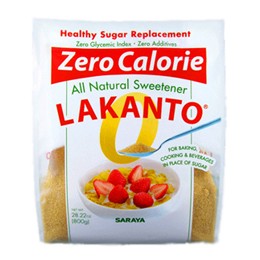
LAKANTO
Lakanto
is a product that has combined Erythritol and Luo Han Guo and has a
sugar taste. Easy to bake with, it can be used to replace sugar cup for
cup. Purchase in our online Kitchen Store.
STEVIA
Also
known as Rubiana, Stevia is an extremely sweet herb native to south
America. It's been used for decades in Japan and other countries but
was banned from being sold in the United States as a sweetener (natural
foods stores carried it under a dietary supplement label for years)
because Monsanto (huge food and food poisoning conglomerate) held the
patent on the artificial and dangerous sweetening, Aspartame (Equal and
Nutrasweet). for years, natural health advocates worked to bring Stevia
to where it is now, finally being available on our store shelves as it
should be. The big companies are now making and promoting products like
Truvia, but don't forget what may be hidden under their 'natural
ingredient' list! I'll write more on that in another post.
Stevia
can have an aftertaste, and is 200-300% sweeter than sugar so it can be
very hard to bake with. It works well when it's used in combination
with another sweetener.
COCONUT or PALM SUGAR
The
juice of the coconut palm blossom is boiled into a thick syrup, dried
and ground into crystals. Nutritious, it has a similar taste to brown
sugar (which is nothing more than refined sugar with a bit of molasses
added back in).
DATES/DATE SUGAR
Date
sugar is dehydrated and pulverized dates. I often use whole, pitted
dates in desserts or shakes, but date sugar or paste is a quick and easy
substitute! With lots of vitamins and minerals and fiber, it has the
highest concentration of fruit sugars of any other fruit. It's also the
oldest known fruit and some historians suggest it was the date, rather
than the apple that caused the troubles with Adam and Even, although
I've also heard the pomegranate may lay claim to that!
DEHYDRATED SUGAR CANE JUICE
Rapadura
is the commercial name for this sugar, which is better than table sugar
because it retains its vitamin and mineral content.
SUCANAT or TURBINADO SUGAR
Sucanat is actually a brand name for 'sugar cane natural' and is a less refined sugar than white table sugar.
AGAVE
Low
on the glycemic index agave 'nectar' is derived from the Agave cactus
and is delicious. So delicious I think it's just too good to be true. I
use it very sparingly, if at all because there are so many
contradictory opinions and claims I'm not sure if the juices is boiled
down like Maple Syrup or if it's processed similarly to High Fructose
Corn Syrup. Truly 'raw' Agave manufacturers keep from heating the
liquid above 118 degrees (the temperature at which the enzymes die) when
thickening it. I'd like to think at least this form of Agave is safe.
CONCENTRATED FRUIT JUICES
These
juices, such as a product called 'Fruit Sweet", are boiled down to syrup
and are mostly composed of fructose so should be used sparingly.
HONEY and MAPLE SYRUP
Both
are sweeter than sugar and contain lots of vitamins, minerals and amino
acids. Maple Syrup is made by boiling the sap of the Maple tree and we
all know that bees make Honey which is best purchased in it's raw,
unprocessed form.
YACON SYRUP
Similar to Molasses,
with half the calories of sugar, this syrup is derived from the South
American Yacon root. It's considered a 'prebiotic', as it's high in
fructo-oligosaccharides (FOS) which feed the good bugs in the belly.
MOLASSES
This
is what is produced when sugar is refined. It contains the vitamin and
mineral content that the refined sugar lost during processing.
SORGHUM MOLASSES or SYRUP
This
syrup is made from the Sweet Sorghum Grain which is similar to Millet.
Its juice is boiled as with Maple Syrup. It's sweeter and lighter in flavor than
Molasses and yummy.
Copyright 2012-2014 California Country GaL | Annabelle | All Rights Reserved |
|
Hi Y'all!
 I'm Annabelle, a quirky homemaker just tryin' to carve out my little piece o' sunshine in the California countryside. Botox and tofu are scarce in these parts...and Mom always said "Eat your Fat 'cause it's GOOD for ya!" |
A GREAT CHOICE FOR YOUR SUGAR NEEDS! |